
Filters
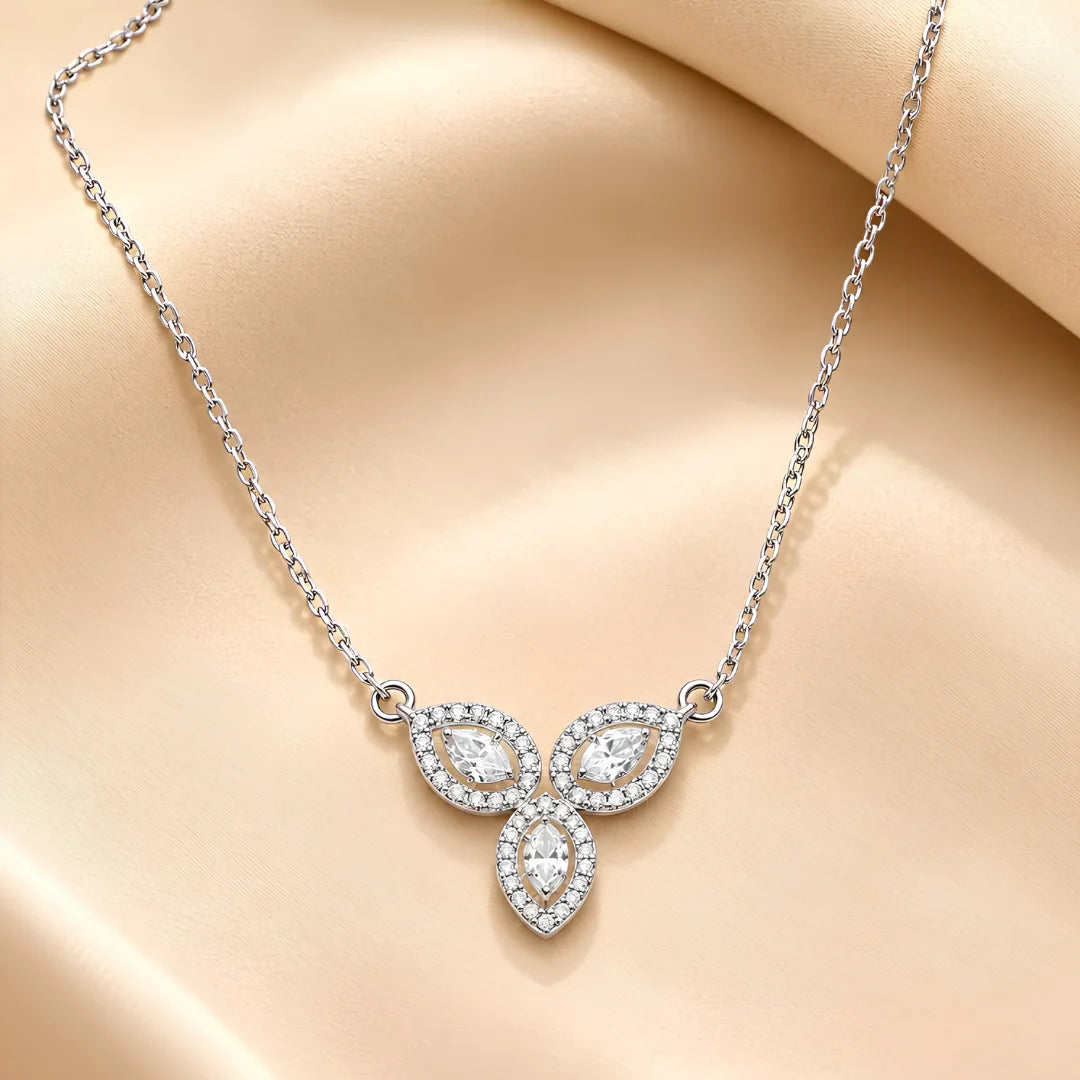

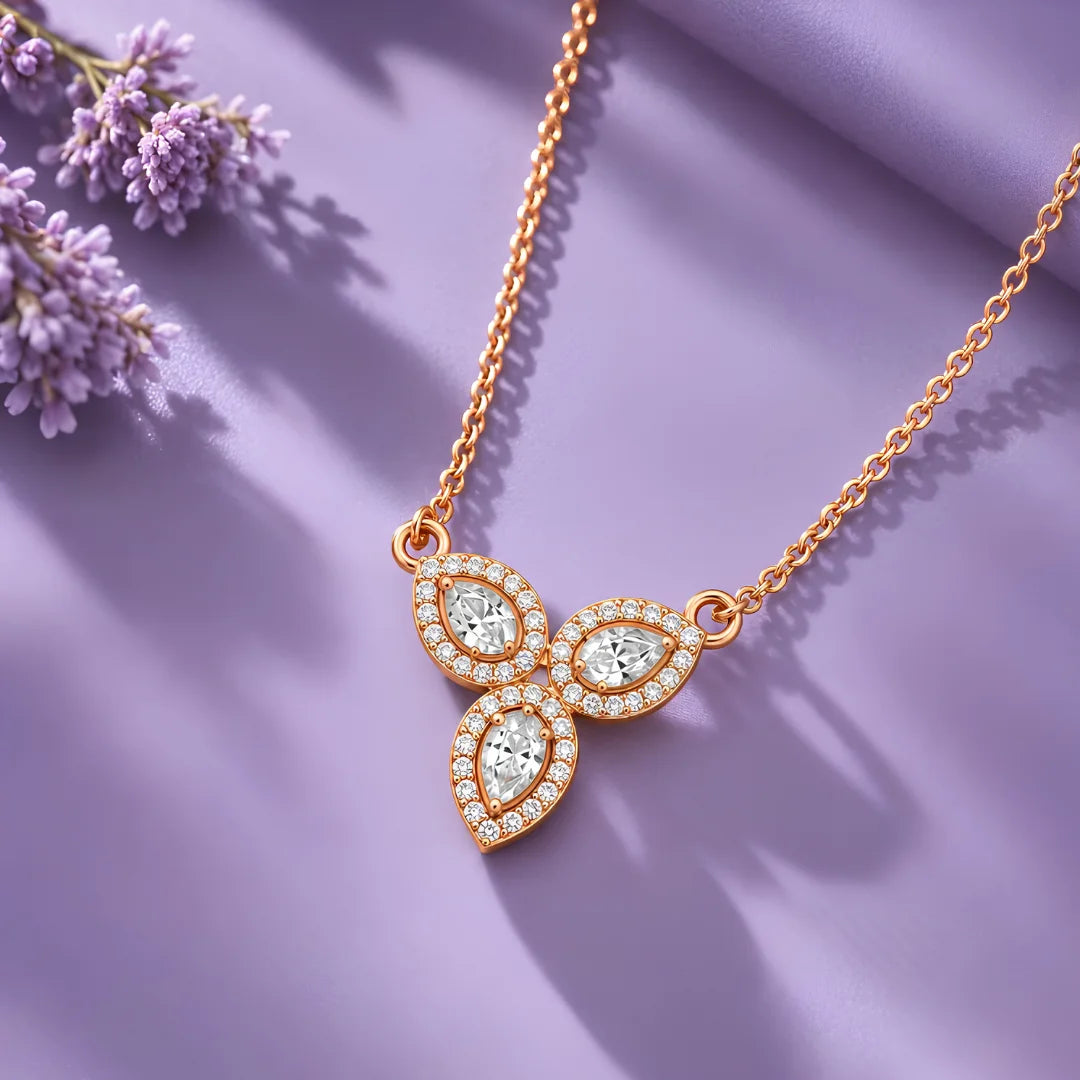
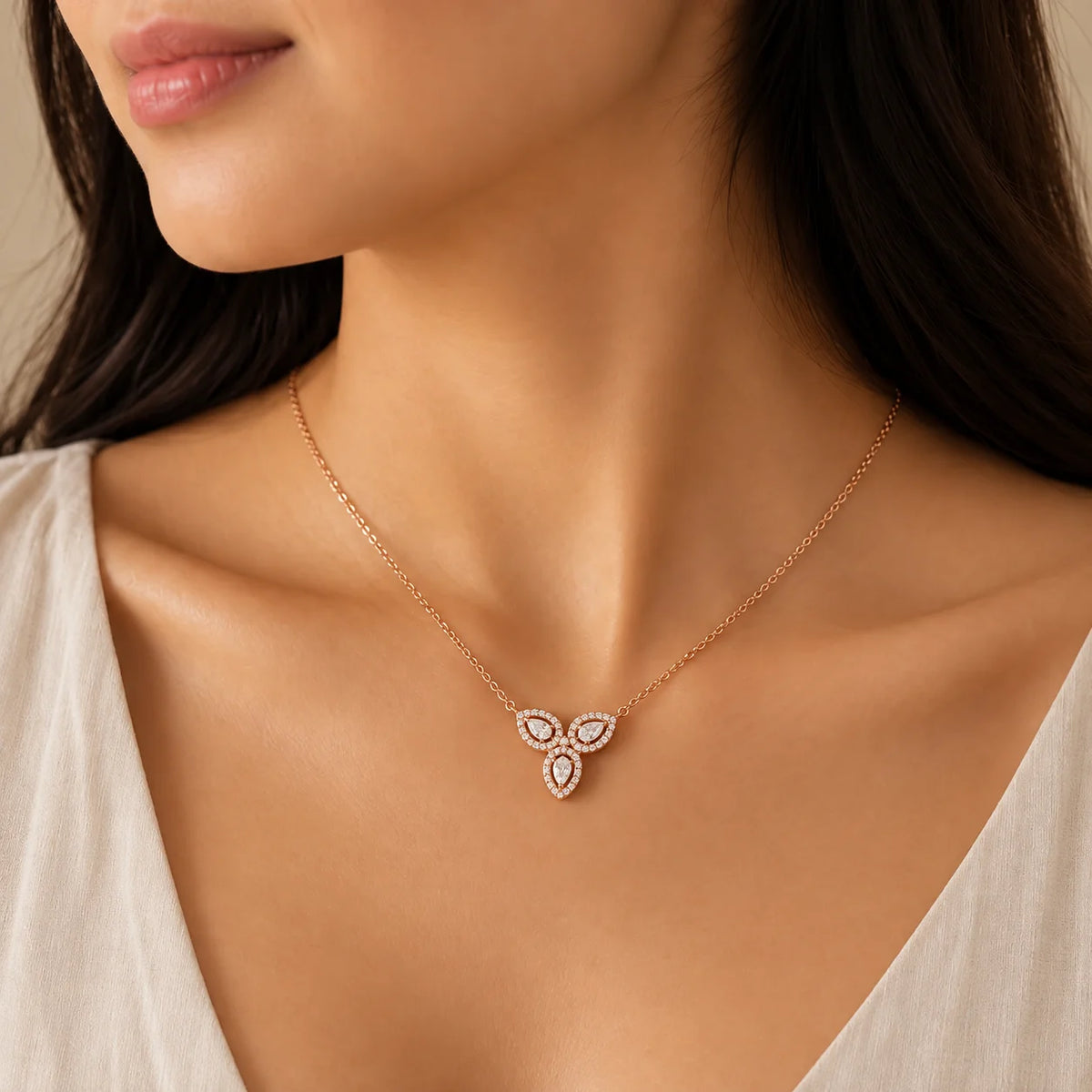
Showing 74 of 74
Silver necklaces for women, made for everyday shine
A silver necklace is usually the first piece of fine jewellery someone buys for themselves, and the one worn most often afterwards. This range covers the three forms that matter in daily life: fine chains that disappear under a collar, pendants that sit at the collarbone, and heavier medallion pieces kept for occasions.
Everything in this range is 925 sterling silver: 92.5% pure silver alloyed for hardness, finished to resist tarnish, and free of nickel and lead so it sits safely on reactive skin. Pieces are made and stocked in India and dispatched within 24 hours.
Which necklace length should you choose?
Length decides where a necklace sits, and that single measurement matters more than the design when it comes to whether a piece gets worn. The safest way to choose is to measure a chain you already wear and like: lay it flat, measure end to end including the clasp, and match that number. Guessing from a product photograph is unreliable because the model's neck and the camera angle both distort apparent length.
Most of this range is made at 44 cm, which falls on the collarbone on the majority of adult women and is the length that works across the widest set of necklines. If you are buying without being able to measure, that is the length to default to.
| Length | Name | Where it sits | Best with |
|---|---|---|---|
| 36-41 cm | Choker | Base of the neck | Open and boat necklines |
| 42-46 cm | Princess | On the collarbone | Almost everything - the default here |
| 50-58 cm | Matinee | Below the collarbone | Kurtas and high necklines |
| 60 cm + | Opera | On the chest | Layering over a shorter chain |
How does neckline change what works?
A necklace and a neckline occupy the same space, and the piece either fills that space or fights it. High necklines - closed-collar kurtas, turtlenecks, boat necks - leave no skin at the collarbone, so a 44 cm chain lands on fabric and loses its outline. A longer 50 to 58 cm piece clears the fabric and sits against it instead, which reads as deliberate.
Open necklines do the reverse. A V-neck creates a vertical shape that a pendant can sit inside, and a shorter chain keeps the pendant above the point of the V rather than disappearing into it. Round and scoop necks are the most forgiving and take almost any length.
For sarees and anything with heavy embroidery at the shoulder, keep the necklace shorter and simpler than you would otherwise. Embroidery already occupies the visual space, and a large pendant competes with it rather than complementing it.
Chain, pendant or medallion?
A plain chain is jewellery you stop noticing, which is the point of it. It carries light without carrying a shape, so it works under collars and layers with anything added later.
A pendant gives the piece a focal point and a weight distribution: the chain holds position because there is something at the bottom of it holding it there. Smaller pendants under about 3 cm stay stable through a day of movement; larger ones need a heavier chain to stop the clasp travelling round to the front.
Medallion styles are flat, wide and usually detailed across their whole face. They sit best on bare skin where the detail is visible, which makes them an occasion piece more than an everyday one.
What to check before you buy a silver chain
Chain construction decides how long a necklace lasts, and it is the thing least visible in a photograph. Cable and rolo links are the most durable for daily wear because each link is individually formed and closed. Box and snake chains look cleaner but kink permanently if bent sharply, and a kinked snake chain cannot be repaired - it has to be replaced.
Clasp type matters almost as much. A spring ring is small and discreet but harder to operate one-handed; a lobster clasp is bulkier and considerably more secure, which is what you want under a heavier pendant. Whichever it is, the jump ring connecting the clasp to the chain should be soldered closed rather than simply bent shut, because an open jump ring is the single most common point of failure in necklaces.
Finally, look at the stated length and compare it against something you own rather than against the photograph. Model height, camera angle and how a piece is styled all change apparent length considerably.
How do you stop silver from tarnishing?
Put jewellery on last and take it off first. Tarnish is a reaction between silver and sulphur compounds in air, sweat and cosmetics, so what dulls a piece is almost never ordinary wear — it is perfume, hairspray, sunscreen, hand sanitiser and chlorine. Dressing first, spraying second and putting jewellery on last removes most of that contact in one habit.
An anti-tarnish finish slows the reaction considerably but does not stop it, and nor should it: tarnish is evidence that the metal is genuinely silver. When a piece does dull, a soft dry cloth brings it back in under a minute. Avoid toothpaste and household cleaners, which are abrasive enough to scour the polish off along with the tarnish, and avoid silver dips on anything oxidised, because they strip the darkening the design depends on.
How should silver be stored?
Dry, dark and separate. Moisture accelerates tarnish, which is why a bathroom shelf is the worst place in the house for jewellery and a bedroom drawer is among the best. Each piece should have its own pouch or compartment, because silver is soft enough to scratch silver and a drawer of loose pieces grinds against itself every time it is opened.
For anything worn rarely, a sealed bag removes the air that causes the reaction in the first place; a piece stored that way can come out a year later unchanged. Chains should be clasped before storing, since almost all tangling happens to an open chain moving loose.